Antarctic winter sea ice hits third-lowest extent on record
Scientists say the trend is part of a recent cluster of low readings, with the lowest July and August extents on record all occurring since 2022.
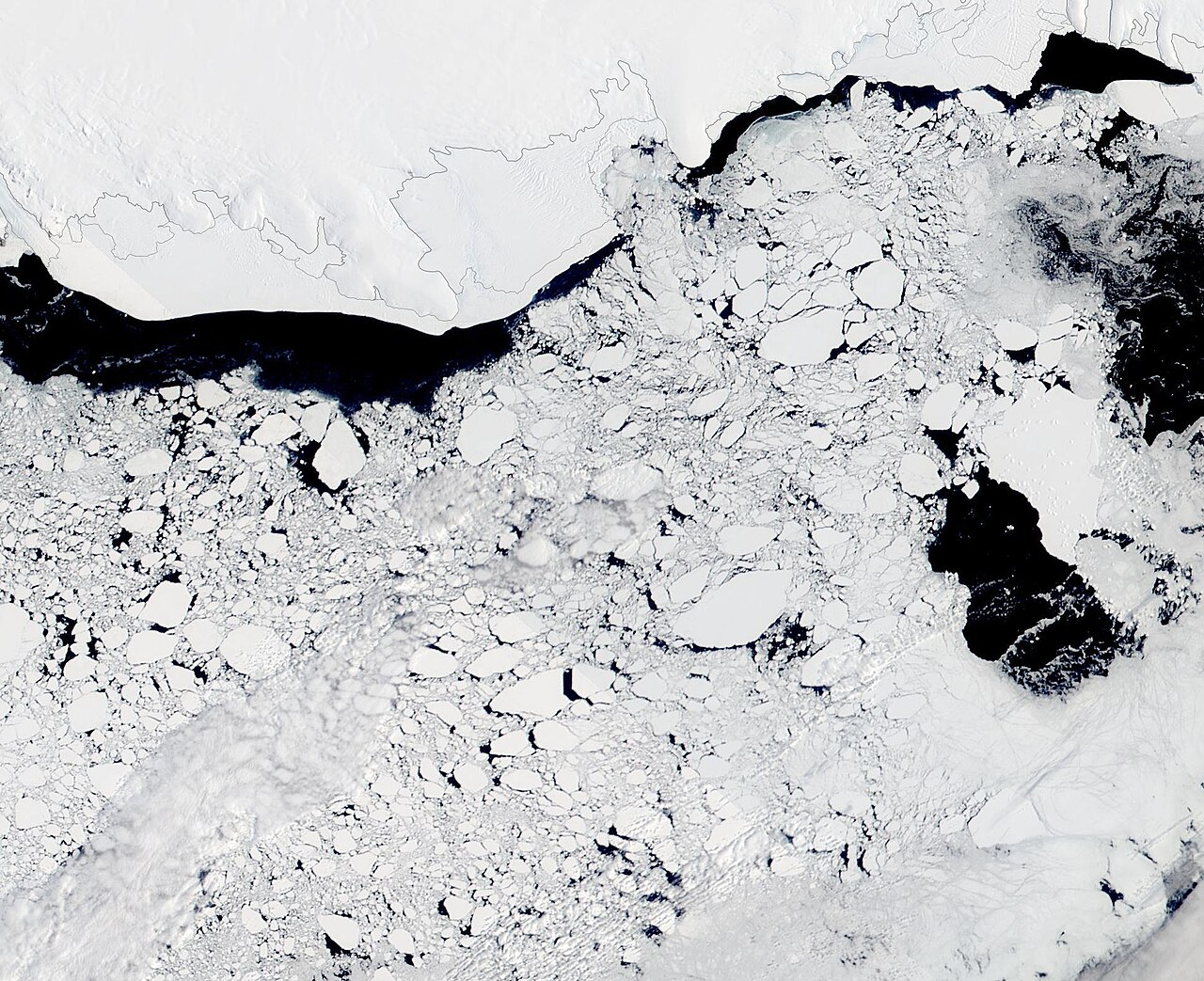
Antarctic sea ice has reached its winter maximum at the third-lowest extent since satellite records began, hitting 17.59 million sq km on 14 September, according to the US National Snow and Ice Data Center.
The reading, taken on 14 September, is the third-lowest Antarctic winter maximum on record, NSIDC said. Extent had been tracking near record-low levels for most of the ice-growth season, which typically runs from February to late September or early October.
Sea ice extent is measured by satellite instruments, and the Antarctic reading typically peaks once a year before melting back through the southern hemisphere summer.
Dr Clare Eayrs, a sea-ice scientist at the Korea Polar Research Institute, told Carbon Brief that all five of the lowest July extents on record have occurred since 2022, and all four of the lowest August extents since 2023.
Dr Lettie Roach, a polar scientist at the Alfred Wegener Institute in Germany, said it was concerning to see these low values persisting after several decades in which Antarctic winter sea ice had been broadly stable or increasing.
Roach added that, compared with the Arctic, it remains less clear how far the recent changes in Antarctic sea ice can be attributed to human-caused warming rather than natural variability. She said more years of observation were needed to establish whether the shift marks a lasting change.
Walt Meier, a scientist at NSIDC in Boulder, Colorado, put it more plainly: “We’ve plateaued, but we’re still low relative to the earlier part of the record.”
NSIDC cautioned that the 14 September date for the maximum could still be revised. Large swings in extent are typical around the Antarctic seasonal peak, the agency said, which often delays confident confirmation of the exact maximum.