Marsquake beneath Valles Marineris suggests canyon is still active
Models of alternative causes, including a meteoroid impact and a landslide, could not reproduce the waves InSight recorded.
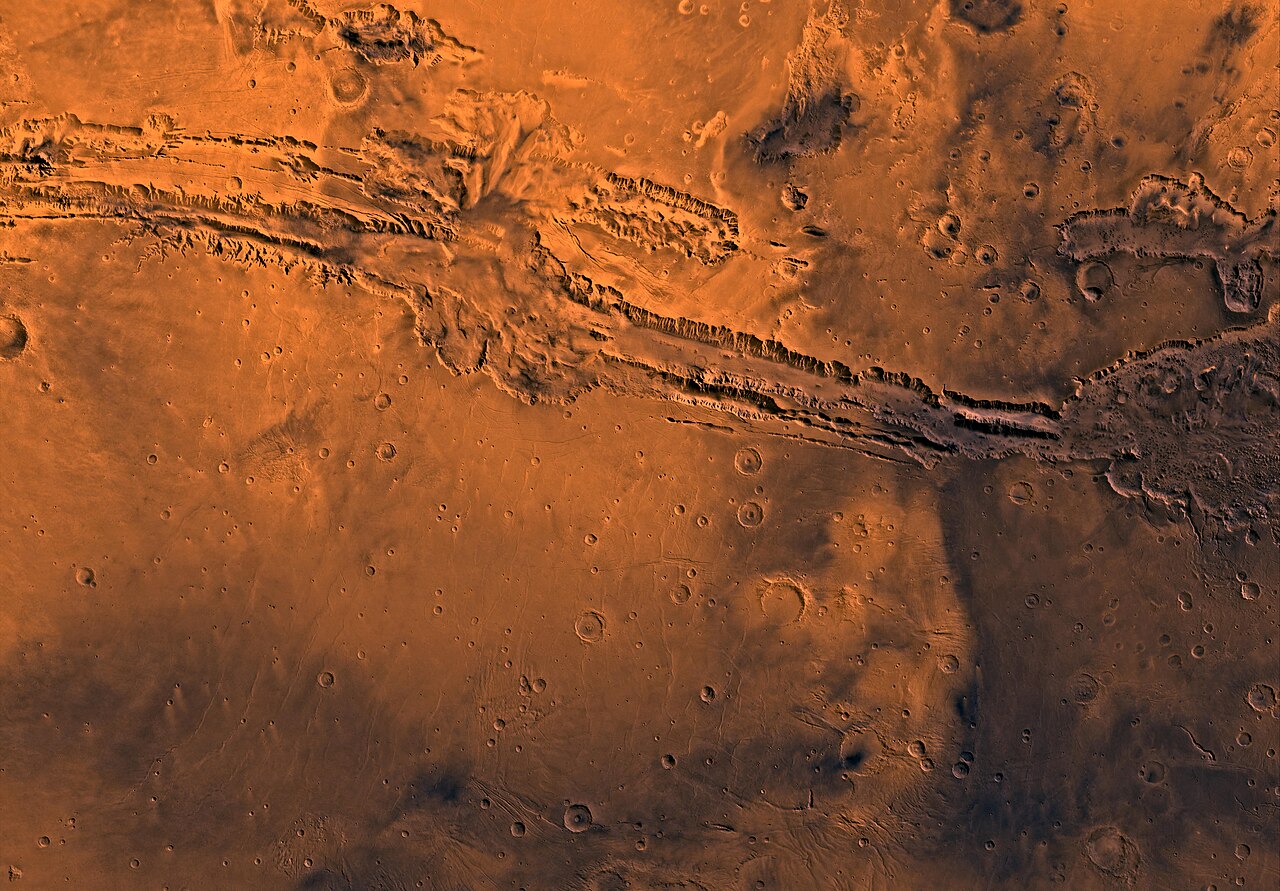
A marsquake recorded in 2021 most likely came from a fault beneath Valles Marineris, which suggests the canyon system is still active, Imperial College London said in an announcement on 15 October 2026.
The announcement describes work by researchers at Imperial and Columbia University on a seismic event known as S0976a, recorded by NASA’s InSight lander on 25 August 2021. The team places its source in the western part of the canyon, roughly 20 to 40 kilometres below the surface.
Valles Marineris stretches nearly 3,900 kilometres across Mars, reaches up to 600 kilometres wide and is more than nine kilometres deep.
The team’s best explanation is a strike-slip event, in which blocks of crust slide horizontally past each other along a steep fault. Alternative explanations, including a meteoroid impact and a landslide, fell short: the models could not reproduce the seismic waves that InSight recorded, and satellite images showed no fresh impact crater or large new landslide.
Jung-Hun Song, a postdoctoral researcher in Imperial’s Department of Earth Science and Engineering and lead author of the study, described Valles Marineris as “one of the most spectacular geological structures anywhere in the Solar System”.
Dr Folarin Kolawole, an assistant professor at Columbia University and a co-author, said the finding showed that on a planet without plate tectonics, “structures created billions of years ago can remain important”.
Why the cause was uncertain
Earlier work had placed the event near western Valles Marineris, but its cause remained open. “On Mars, a seismic signal doesn’t necessarily mean that a fault has ruptured”, the announcement says, because meteoroid impacts, landslides and other processes can also send vibrations through the planet.
The announcement says the study is published in Nature Communications. Every researcher it quotes belongs to the research team.
The researchers say the findings show how much information remains in the seismic recordings InSight returned, even though its mission ended in 2022. Dr Doyeon Kim, an assistant professor in Earth and Planetary Science at Imperial and senior author of the study, said S0976a “has turned out to be an extraordinary event, playing an important role in our understanding of the Red Planet”.