White dwarf is first known green star, astronomers say
No white dwarf is close enough to be seen directly, so the team calculated the colour of each star from its spectrum.
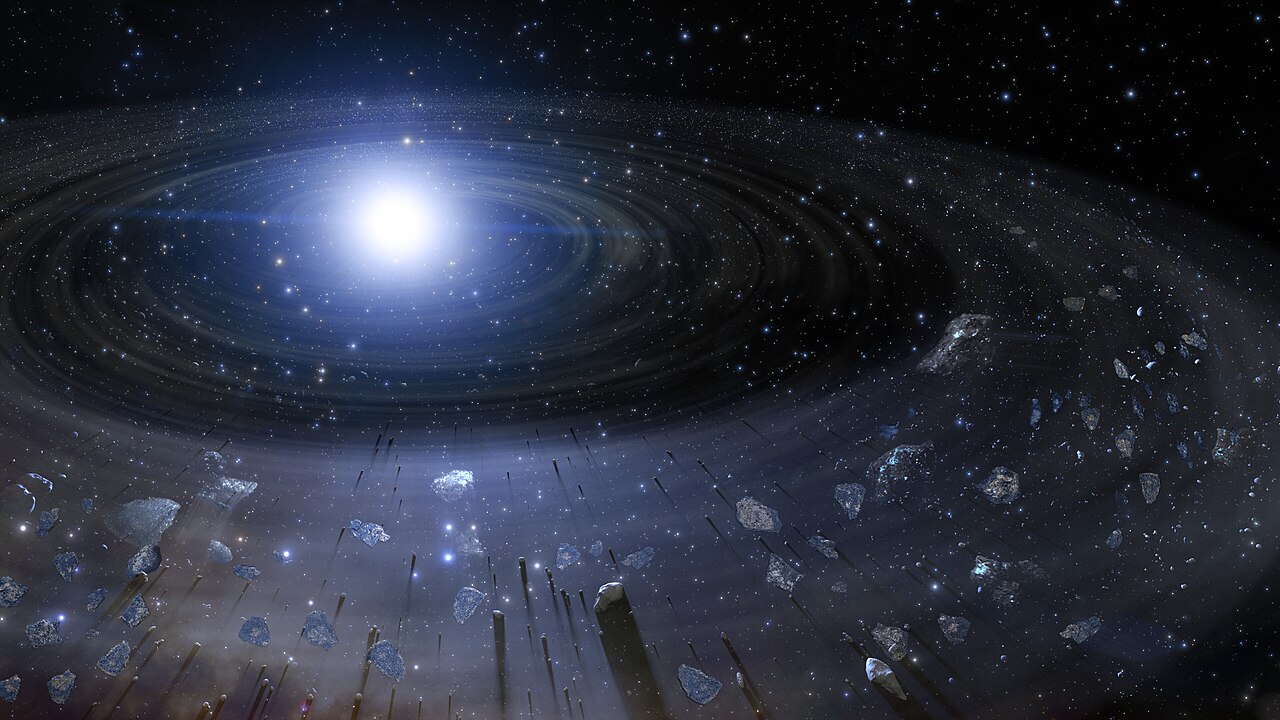
A white dwarf called WD J1330+6435 would look green to the human eye, making it the first known genuinely green star in the Galaxy, astronomers at the University of Warwick have said.
The star is roughly 4,000 degrees Celsius and has taken in rocky material from its planetary system, which has enriched its atmosphere with calcium, lithium and sodium, the university said. As far as the researchers are aware, no other star, living or dead, has ever been credibly reported as green.
Dr Mark Hollands, a Warwick Prize Fellow who led the work, put the colour down to sodium in the star’s atmosphere.
“The traces of sodium in the atmosphere of this white dwarf absorb the orange part of the spectrum, leaving behind a ghostly green glow,” Hollands said.
No white dwarf is close enough for its colour to be seen directly. The researchers worked it out instead from spectra that astronomers already collect, running them through a model of human colour vision.
White dwarfs are the dense remnants left behind when Sun-like stars reach the end of their lives. For most stars, colour is a guide to temperature: cooler stars look orange, stars like the Sun look white and the hottest glow pale blue.
The university said the coolest white dwarf atmospheres can reach around 1 gram per cubic centimetre, roughly the density of water. In those conditions, any trace elements that may be present, such as carbon, calcium and sodium, absorb light across a wider range of colours.
Pink, purple and yellow
The team found that carbon-rich white dwarfs are typically pink or purple, while those enriched with debris from shattered asteroids and comets tend towards yellow.
At the other extreme, the team identified what may be the reddest star ever recorded, WD J1011+2845. The white dwarf is just 48 light years from Earth, and its carbon molecules squeeze almost all of its light into wavelengths beyond 600 nanometres, producing what the university described as a deep salmon-pink glow.
The team also studied the 151 white dwarfs within about 65 light years of Earth. Five had unusual colouring, which suggests that roughly one in 30 white dwarfs in the Universe will shine with an unusually coloured light.
For the other 146, the median colour temperature – a measure also used to describe light bulbs – was approximately 6,800 Kelvin, which people perceive as white.
Professor Boris Gänsicke of the university’s Department of Physics said that “if we take the median across a representative population of white dwarfs, we found that the average white dwarf really is white”.
The paper is published in RAS Techniques and Instruments.