Webb finds signs of Mars-sized and Moon-sized collisions
Scientists estimate roughly 1% of young stars show this phase, but a sample of 21 dust disks points to two kinds of impact.
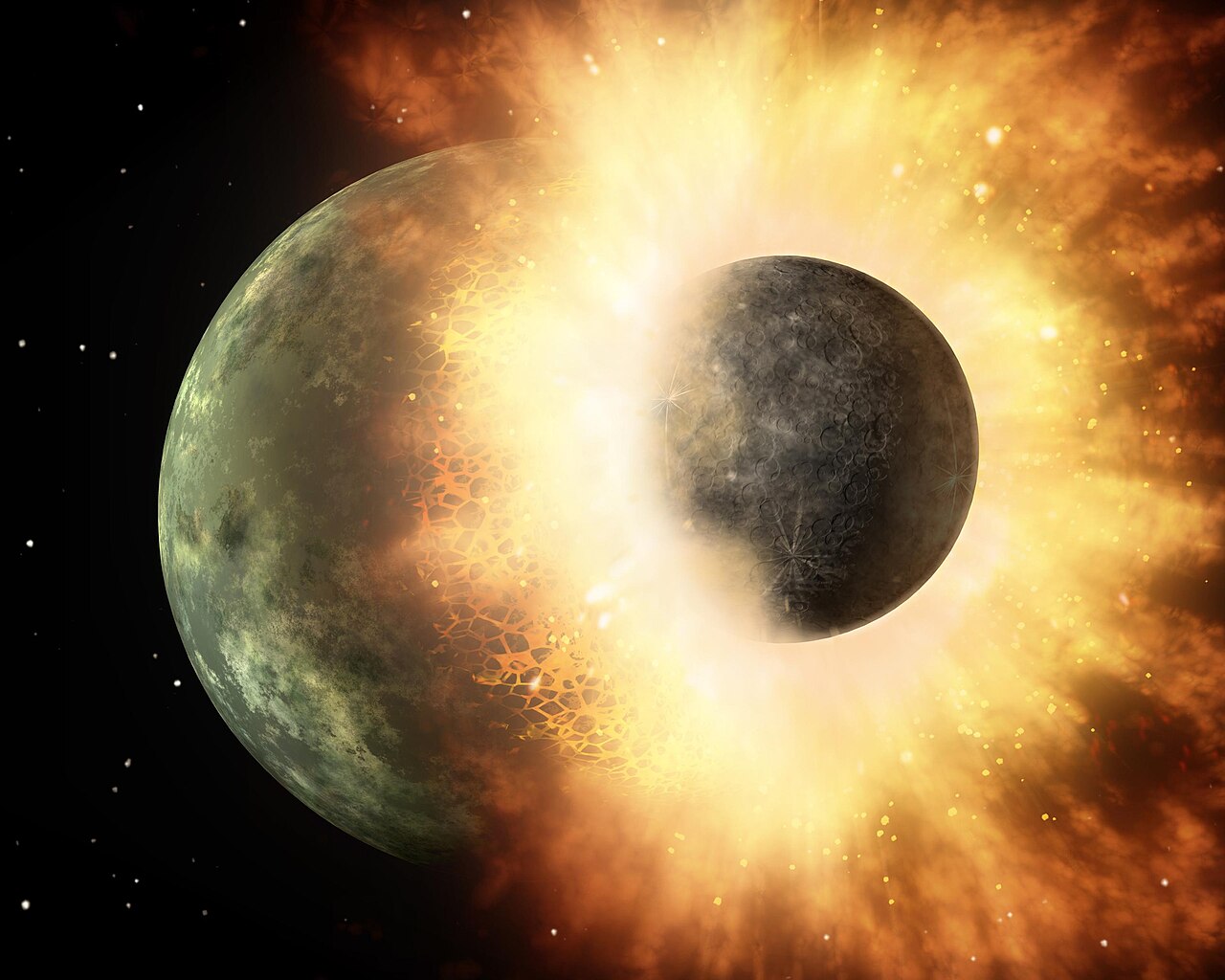
Astronomers using the James Webb Space Telescope have found dust around young stars that shows signs of collisions between Mars-sized or Moon-sized bodies, according to a news release from NASA.
The work, led by Kate Su of the Space Science Institute in Boulder, Colorado, was published on 1 October 2026 in The Astrophysical Journal.
The stars belong to a class called extreme debris disks, discovered by NASA’s retired Spitzer Space Telescope. These systems hold unusually large amounts of warm dust close to the star, in a region comparable to where rocky planets orbit in our solar system.
Such systems are rare. Theory suggests many more should be visible, yet scientists estimate that roughly 1% of young stars show observable signatures of the phase, based on the data collected so far.
The team still built a sample of 21 extreme debris disks, five from Spitzer’s archival data and 16 from Webb.
“This is the first time we have gathered enough systems to truly understand this subclass that we call extreme debris disks,” Su said.
To learn more, the team sorted the disks by mineral into silica-rich and silica-poor groups. Obsidian, a volcanic glass, is one example of silica-rich material on Earth, while the silica-poor mineral forsterite appears as green sand grains on some beaches in Hawaii.
About one-third of the sample is silica-rich, which suggests high-energy impacts between Mars-sized bodies that vaporize a significant portion of their material. The other two-thirds are silica-poor, pointing to smaller grazing collisions between Moon-sized objects.
Silica-rich disks turned up only around stars younger than 300 million years, while silica-poor disks persist across a broad range of ages. Simulations suggest terrestrial planets such as Earth form within the first few hundred million years, a period the release says aligns with the ages of the silica-rich disks.
The team expects no silica-rich systems among older extreme debris disks.
“We only have three disks in our sample that fit that age criteria, so it’ll be nice to observe more of these systems to confirm our hypothesis,” said Attila Moor of Konkoly Observatory in Budapest, Hungary, a coauthor of the study. Moor also said there are “many things we still don’t know about these disks”.
The findings can be applied to the solar system, which may have experienced more than one extreme debris disk phase. If older silica-poor disks and their random intervals of infrared brightness do reflect orbital instability, that would be broadly consistent with the Late Heavy Bombardment hypothesis, in which migrating gas giant planets triggered catastrophic collisions.
“How rocky planets formed and giant planets evolved are part of the broader story of the solar system’s formation. It’s all one story,” Su said.