Roman telescope’s main instrument nearly 30% better than predicted
Engineers adjusted the telescope’s secondary mirror by a distance smaller than the width of a human hair.
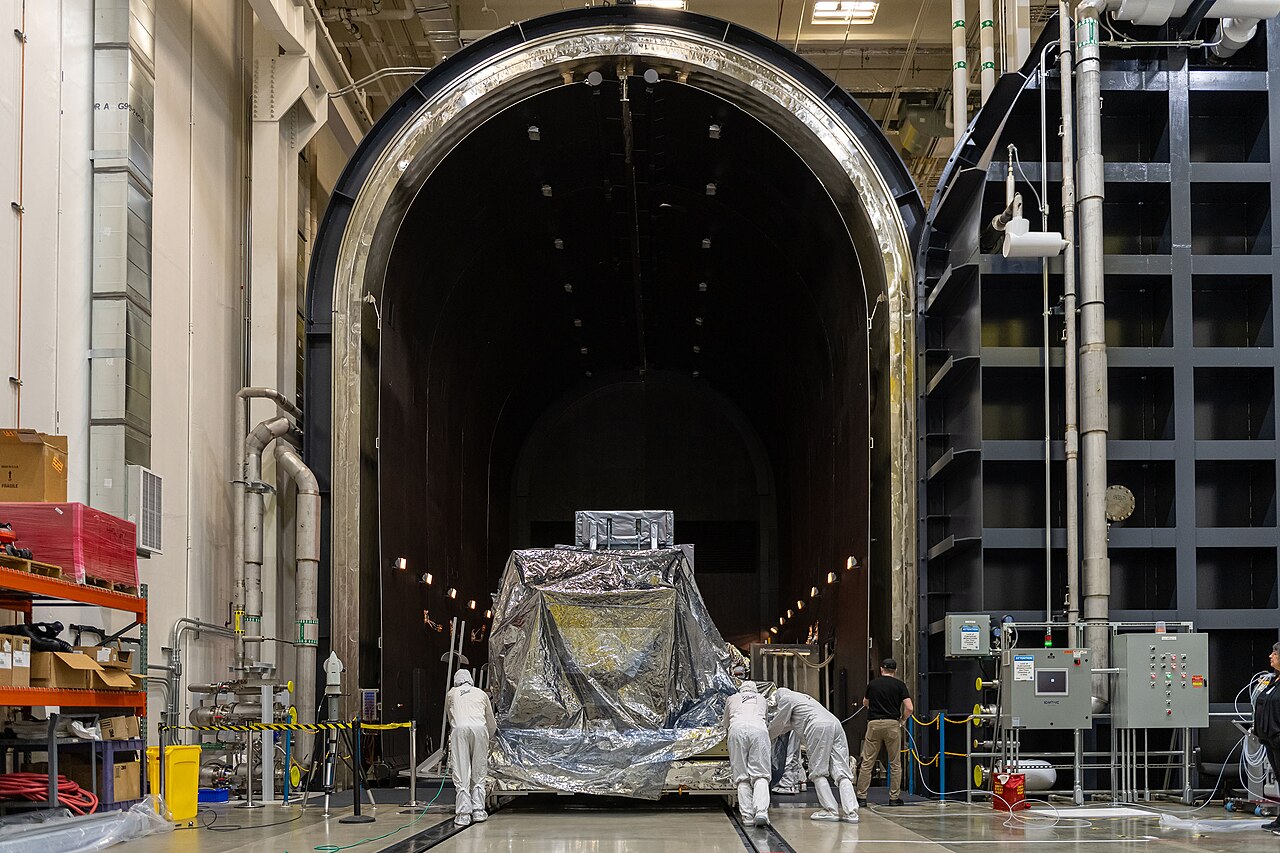
The main instrument on NASA’s Nancy Grace Roman Space Telescope is performing nearly 30% better than the mission team predicted, after engineers made tiny adjustments to its optics, NASA has said.
The results for the Wide Field Instrument were set out in a blog post published on 14 October 2026, written by Ashley Balzer.
Dave Hickey, a Wide Field Instrument systems engineer at NASA’s Goddard Space Flight Center in Greenbelt, Maryland, said all of Roman’s sweeping surveys will rely on it.
“Many of the mission’s primary goals, like studying dark matter and dark energy, wouldn’t be possible without it, so it’s both exciting and a huge relief to see that it’s working well!” Hickey said.
Sharper than required
The requirement for image quality was set at about 90 nanometres RMS (root mean square), which NASA said means the optics deviate from absolute perfection by 90 nanometres. After corrections, the instrument’s optics have an error of just 63 nanometres RMS. The post does not set out how the figure of nearly 30% was calculated.
“All of the images from Roman’s cosmic surveys will be even sharper than we expected,” said Alden Jurling, a senior optical engineer working on Roman at Goddard.
“We moved the secondary mirror by about one-sixteenth of the diameter of a human hair,” Jurling said.
Jurling said the adjustment nudged the height of the secondary mirror above the primary. Scaled up to the height of the Empire State Building, Jurling said, that change in height would be a little bit less than a single US penny stacked on the tip of the tower.
Matthew Bolcar, Roman’s optical systems lead at Goddard, said the telescope’s performance was excellent even before the optics were adjusted, thanks to preparatory work on the ground before launch.
“Our ground testing couldn’t exactly reproduce the environment Roman would experience in space, such as the absence of gravity,” Bolcar said, adding that the recent assessments showed the testing was “excellent”, with both of Roman’s instruments “either matching or exceeding the performance we had predicted”.
Since the Wide Field Instrument was activated in September, the team has tested its 18 sticky note-sized detectors, its element wheel (which holds filters and other tools), calibration LEDs, alignment mechanism and thermal system.
Roman’s second instrument, the Coronagraph Instrument, produced images that were slightly out of focus at first, though not to the degree the team had anticipated, and the problem was relatively simple to correct, NASA said.
Its performance now “meets the team’s high expectations”. The team will keep calibrating its camera settings and choose settings for its deformable mirrors before attempting to demonstrate its light-blocking capabilities “in the coming weeks”, the post said.