Honeybees chase wild pollinators off flowers around Cambridge
Other pollinators actively avoided honeybees in up to 36% of interactions, and only the ivy bee contested them, ARU said.
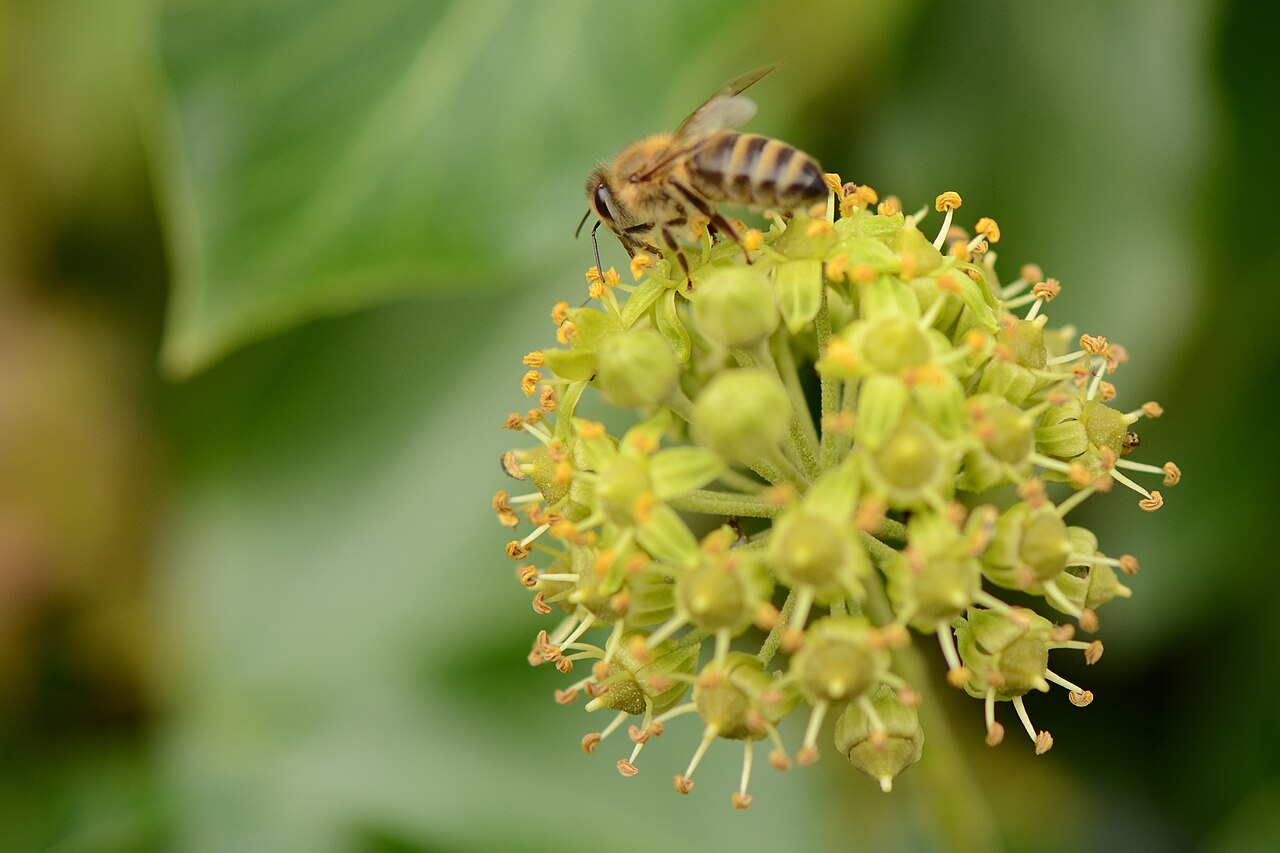
Honeybees often chased wild pollinators away from bramble and ivy flowers in a two-year study around Cambridge, researchers at Anglia Ruskin University (ARU) said on 14 October.
The study, published in the journal Ecological Entomology, took place at five sites in and around Cambridge, all within 300m of known honeybee colonies.
Researchers spent 93 hours watching insects feed on bramble and ivy. They sorted the visitors into five categories – honeybees, bumblebees, solitary bees, hoverflies and a group of others that included butterflies, beetles and wasps – and recorded every interaction in which one insect disrupted or prevented another from accessing a flower.
Each interaction was scored as a win if one insect gained access to a flower, leaving another with less forage, or as a share if both gained access with no conflict.
What the observers found
Higher densities of honeybees were associated with fewer other pollinators and more competitive interactions, and honeybees had a higher proportion of wins in their encounters with other flower visitors.
On bramble, a doubling of honeybee density was associated with a 14% reduction in the abundance of bumblebees. On ivy, an increase in honeybees was linked to fewer solitary bees and hoverflies.
Honeybees won most of their interactions by starting aggressive ones, often chasing other insects away. Other pollinators actively avoided honeybees in 28% of interactions on bramble and 36% on ivy.
In at least one in five of the encounters that honeybees won, on both plants, they physically displaced or chased the rival. The researchers recorded very few aggressive interactions that were not started by honeybees.
The only species that contested interactions with honeybees was the ivy bee, a non-native solitary bee first recorded in Britain in 2001, which was seen defending its food source by displacing and chasing them.
“An interesting exception was the ivy bee, which would win contests more often against honeybees,” said Victoria Buckle, a PhD student at ARU and the study’s lead author.
Beekeepers and warmer weather
ARU said the number of registered beekeepers in the UK had risen from 19,000 in 2010 to 47,000 in 2025. The study also suggests, ARU said, that climate change could further intensify competition between wild and managed pollinators.
Periods of higher temperature were associated with more competitive interactions. Heat stress can cause flowers to produce less nectar, ARU noted, and the more limited forage available could be one reason for the increase.
“The aim of our study was not to discourage beekeeping, but to better understand how competition happens between wild and managed pollinator species with the aim of helping to conserve our wild pollinators, which play such an important ecological role,” Buckle said.
Related
UCAS deadlines for 2027 entry: 15 October for Oxford, Cambridge and most medicine courses, 13 January for most others
White dwarf is first known green star, astronomers say