Milky Way’s multi-planet systems identified so far split into two ‘families’
Simulations that best fit the wide, massive systems have them unstable from birth, said INAF researcher Danae Polychroni.
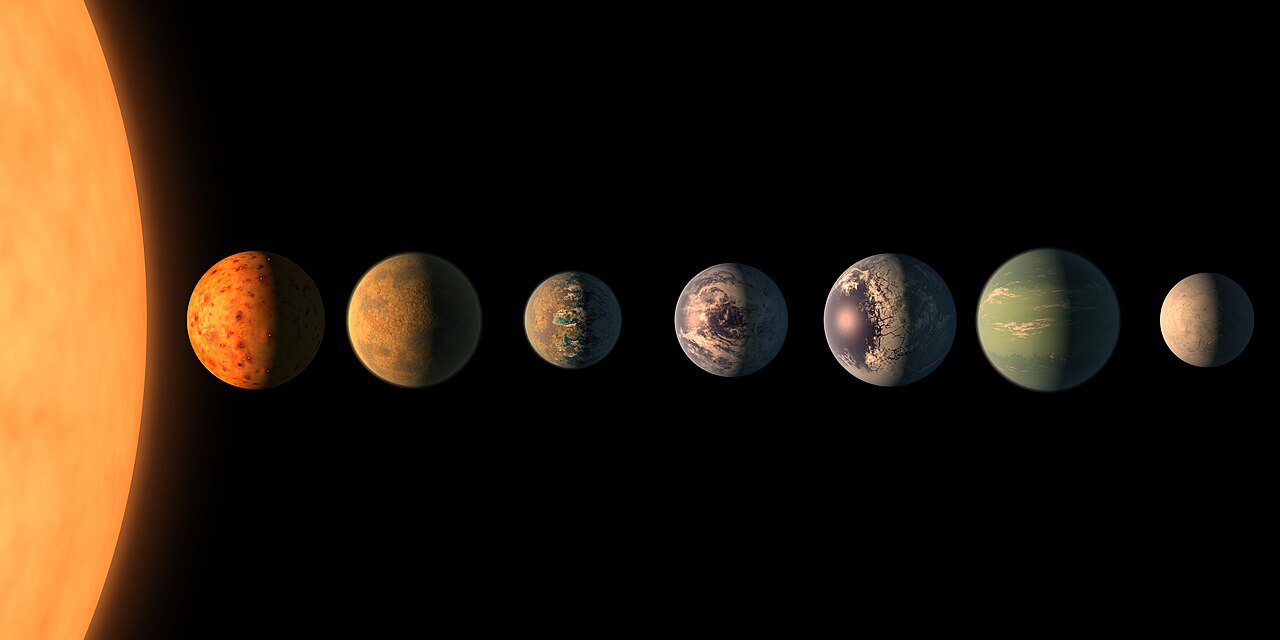
Multi-planet systems identified so far in the Milky Way fall into two distinct “families” tied to the kind of star they orbit, the International Space Science Institute (ISSI) in Bern has said.
The ISSI International Team analysed 300 of the best-characterised planetary systems among more than 1,000 known, in a study published on 13 October in Nature Astronomy. ISSI said it demonstrates for the first time a “genetic link” between a host star and its planets that shapes the birth, dynamical evolution and future stability of the whole system.
The first family is made up of wide, massive systems, often with total masses between twice and 10 times that of the Solar System. They orbit stars that are more massive and richer in metals – elements other than hydrogen and helium – than the Sun.
The second family is compact and lower in mass. Its planets have comparable masses and sizes, in a configuration known as “peas-in-a-pod”, and orbit stars with mass and metallicity equal to or lower than the Sun’s, in most cases at distances much tighter than Mercury’s in the Solar System.
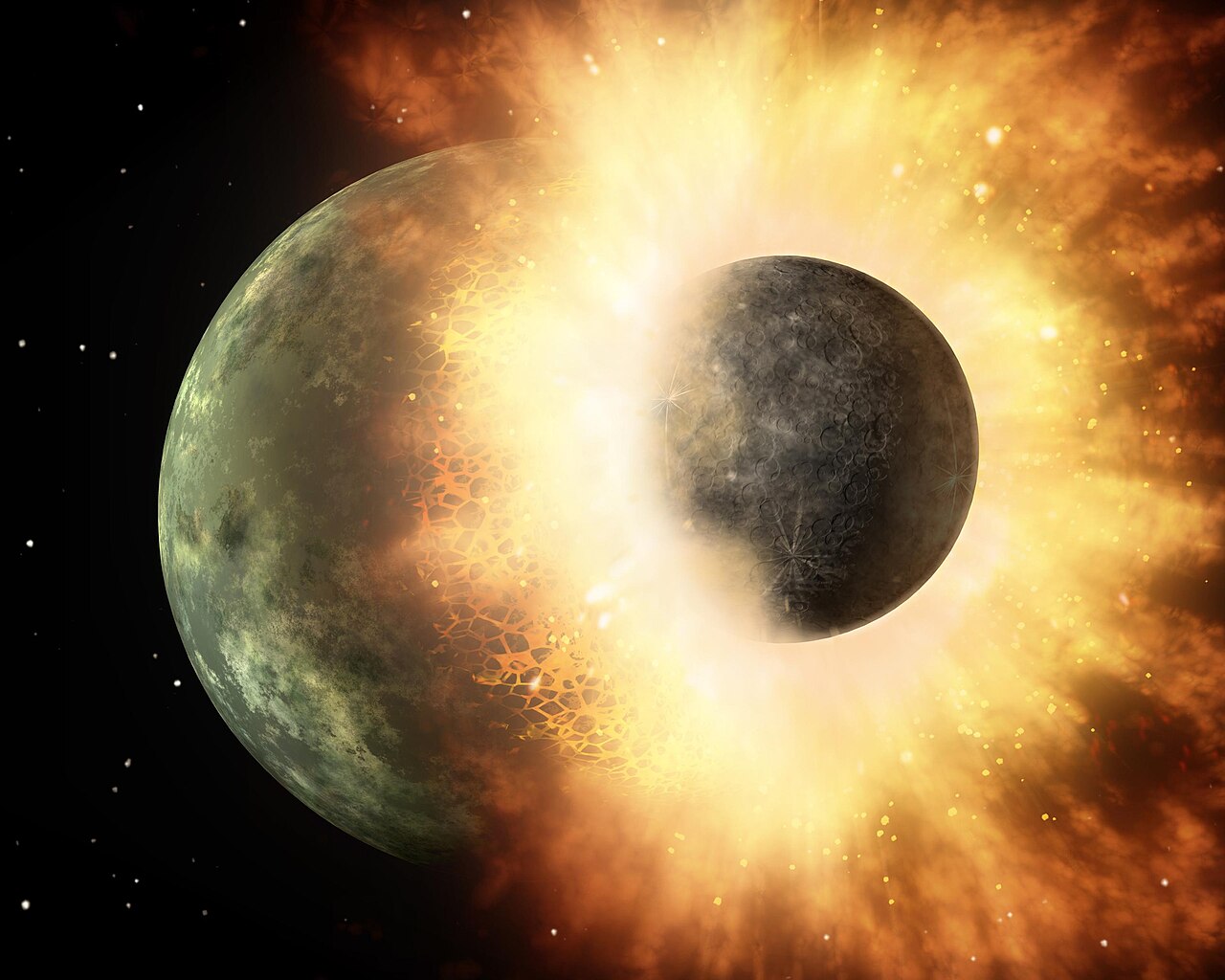
The researchers told the two apart with a series of parameters, among them “dynamical temperature”, which quantifies how far a system departs from an undisturbed arrangement of circular orbits in the same plane. Systems in the first family have a high dynamical temperature, tracing a past of violent gravitational instabilities, giant collisions and planetary ejections. Those in the second family show less violent histories, closer to the Solar System’s.
Diego Turrini, a researcher at INAF and co-first author, said the team began by asking whether the characteristics of planetary systems were fixed at birth or sculpted by evolution over time. “The truth, in the end, turned out to lie somewhere in the middle,” Turrini said.
Checking the split was real
The main difficulty, said co-first author Camilla Danielski of the University of Valencia, was working out whether the two families were real or “just an illusion created by the technological limits of current observational techniques”. Danielski said it became clear that “selection effects acted as the tip of the iceberg”, pointing to much deeper structural differences.
The team also ran numerical simulations of systems with different starting conditions. “The scenarios that best reproduce the dynamical properties of the family of wide and massive systems are those in which the systems are unstable from birth,” said Danae Polychroni, an INAF researcher who supervised that part of the study.
“The greater abundance of material from which planets form around their host stars causes them to be born too large, preventing the system from remaining stable,” Polychroni added.
Understanding the link is essential to guiding the search for planetary architectures similar to the Solar System and for potentially habitable planets like Earth, ISSI said.