Arctic ice cap suggests warming halted the next ice age
Models of its future have the Barnes Ice Cap melting completely within the next few centuries, the release says.
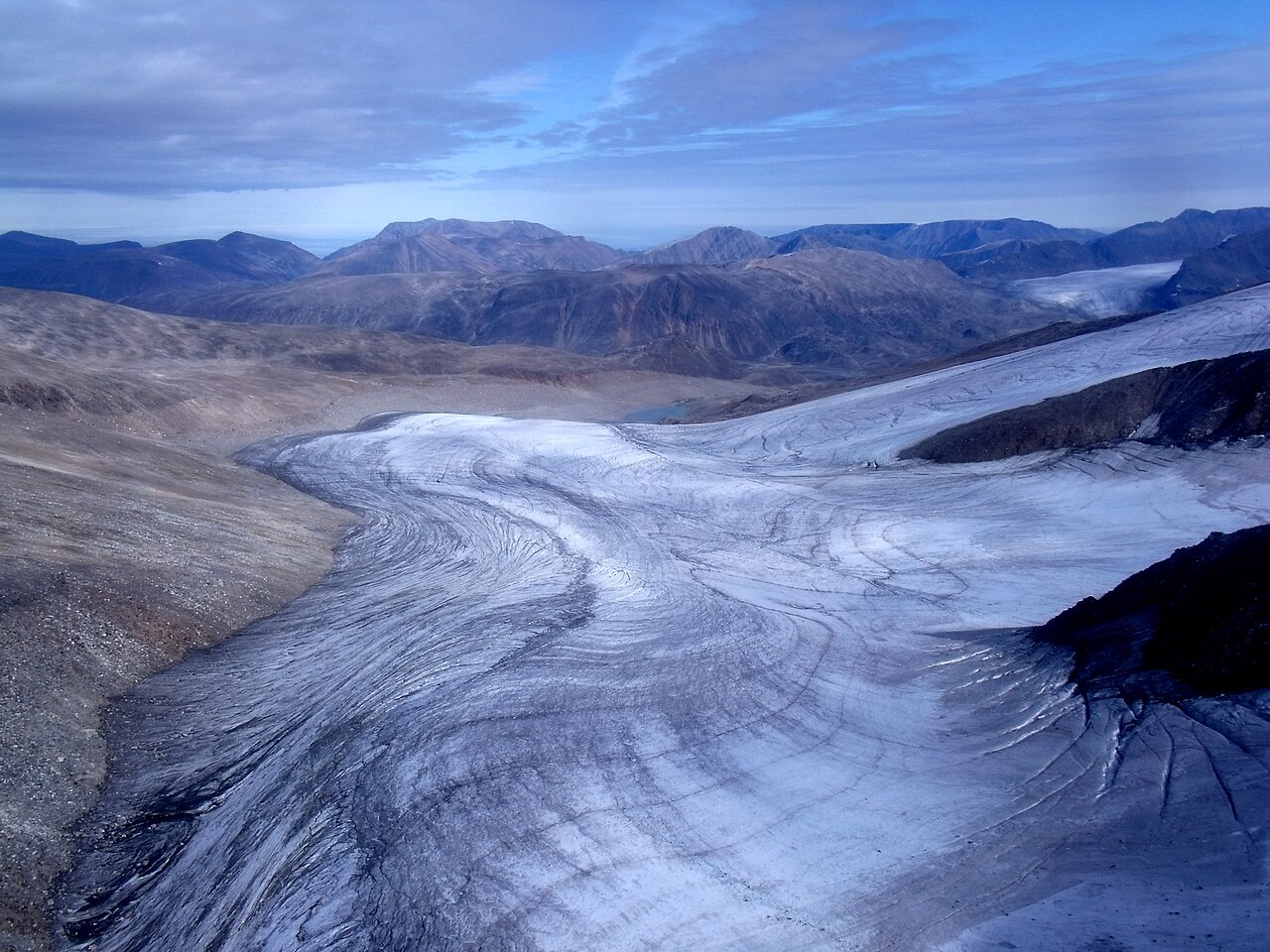
A remnant ice cap in the Canadian Arctic began growing again about 2,000 years ago, which researchers argue marked the start of the next ice age before global warming halted it.
“It was just getting started, everything was normal, the next glaciation was about to happen—and yet it stopped,” said Nicolás Young, a geochemist at the Lamont-Doherty Earth Observatory, part of the Columbia Climate School. “It’s a very powerful example of how we have jolted the system.”
The Columbia Climate School’s press release says Young, fellow Lamont climate geochemist Joerg Schaefer and their colleagues describe the work in a study published in the journal Science. It concerns the Laurentide Ice Sheet, which covered much of Canada and the northern United States from about 95,000 to 20,000 years ago and whose last vestige survives as the Barnes Ice Cap, a Delaware-sized ice cap on central Baffin Island in Nunavut.
The release adds that, technically, Earth is still in the Late Cenozoic Ice Age, which began about 34 million years ago; what people casually call an ice age is usually a glacial period.
Plants under the ice
Unlike most glaciers, the Barnes Ice Cap is frozen directly to its bedrock and does not slide, so it preserves plants that grew when it was small and were later entombed as it expanded. Plants exposed since the ice began retreating in 1960 can be sampled and dated with carbon-14.
Combining plants from beneath the Barnes Ice Cap and smaller, recently melted ice caps in the region, the researchers concluded that the Laurentide reached its minimum size about 3,000 years ago. It began re-expanding about 2,000 years ago, when the climate became cold enough for ice to accumulate. By the 1960s, summer temperatures had risen enough that the ice cap lost more ice in summer than it gained in winter, and the growth ended.
The researchers argue that the first renewed growth of an ice sheet should count as the start of a glacial period, rather than waiting until huge continental ice sheets have formed. Previous model-based studies had suggested the next glaciation would not begin for thousands or even tens of thousands of years.
A slow start, and an open question
Young said the next glaciation had started, but it would have taken thousands of years for the cooling to be noticeable and about 30,000 years for the Laurentide to regain its continent-sprawling mass. Scientists cannot say when the next glaciation might occur in a world with elevated greenhouse gas concentrations, the release says. “What has been an extremely natural and predictable phenomenon is now gone,” Young said.
According to models of its future, the ice cap will melt completely within the next few centuries, and its disappearance could change the dynamics of future glaciations. The release includes no comment from researchers outside the team.