Energy-storing cement holds up as well as commercial concrete in tests
The American Chemical Society said the supercapacitors could in future power everything from emergency lighting to self-powered sensors.
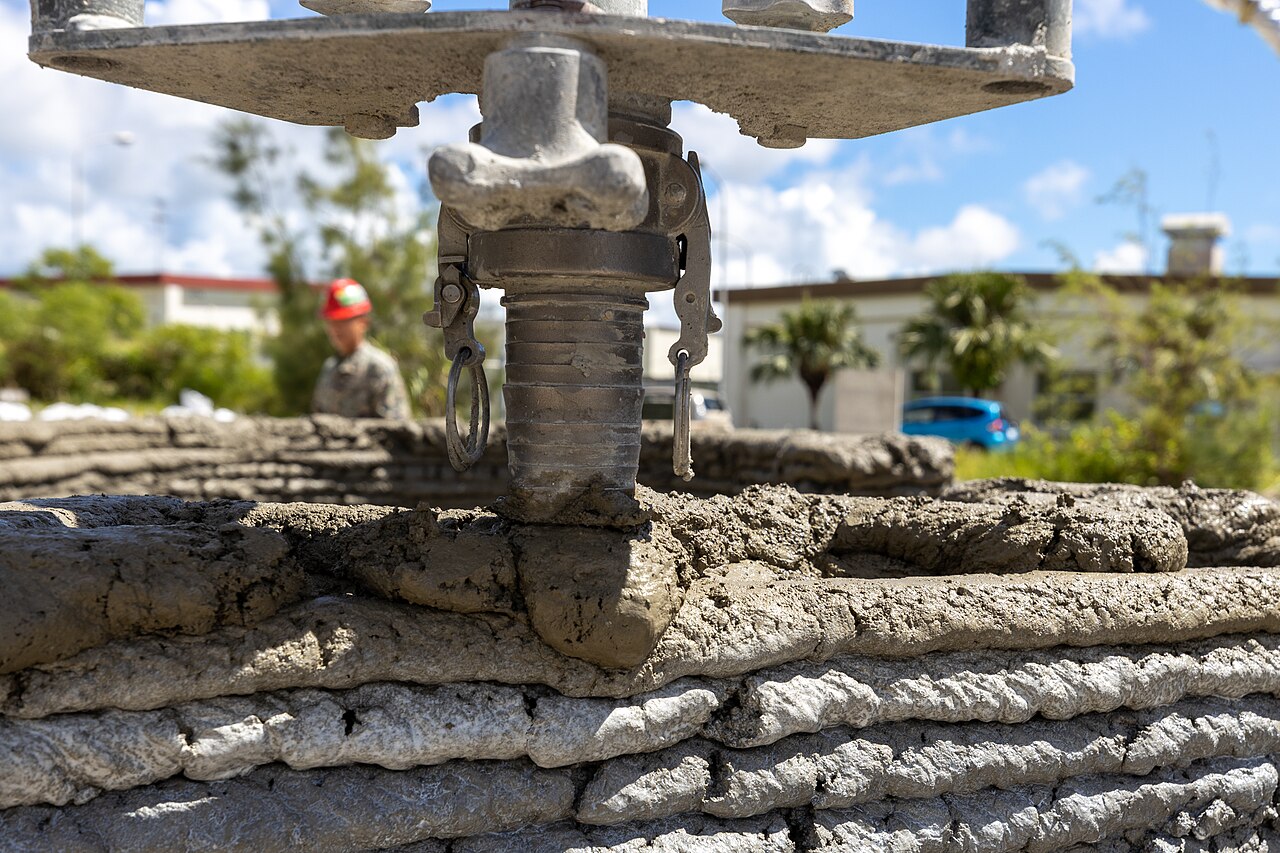
Researchers have developed an energy-storing cement supercapacitor that holds up as well as commercial concrete in tests, the American Chemical Society has said.
The work, reported in the journal ACS Nano, grows out of a hope for the next generation of buildings: powered by renewable sources, with the energy stored nearby, possibly even within the concrete used to construct the building itself.
Supercapacitors store relatively small amounts of energy, but they take it in and release it rapidly, and for millions of cycles in some cases. Built into cement, the researchers hope, they would let energy generated near a building, by solar panels for example, be kept inside the structure rather than in bulky batteries on the roof or in a utility room.
How the supercapacitor was made
Jing Zhong, the study’s corresponding author, and colleagues Wencai Ren and Haiping Wu first mixed carbon nanotubes, carbon black and cement to form a printable electrode ink.
Using a 3D printer, they then deposited the ink onto a small concrete slab in a pattern resembling interlocked fingers. As the cement within the slab was hydrated, its pores filled with water and ions that travelled easily between the electrodes.
That design shortened the distance the charged ions had to travel, so the supercapacitor was more efficient than previous iterations.
In tests, the device had a compressive strength comparable to commercial concrete used in slabs and stairs. Three devices printed on the same slab and wired together also powered a small array of LEDs.
The team found that the supercapacitor operated stably under moderate heating and cooling. At around minus 18 degrees Celsius (zero degrees Fahrenheit), however, its performance started to wane, and future research will focus on strengthening it in cold-weather conditions.
“If renewable energy is available to recharge [the supercapacitors] frequently enough, they could meet some energy needs through repeated charging and discharging,” Zhong said.
The authors acknowledge funding from the Guangdong Hailong Construction Technology Company Limited, a subsidiary of China State Construction International Holdings Limited.
Zhong said that “if building materials could not only support structures but also store energy, sense their surroundings, and even interact with people, buildings would become more than passive shelters. They could become truly smart environments.”