Navi Pillay wins Nobel Peace Prize for work on international law
At a time when judges are sanctioned and their institutions attacked, the committee said, “we need people of courage, vision and determination”.
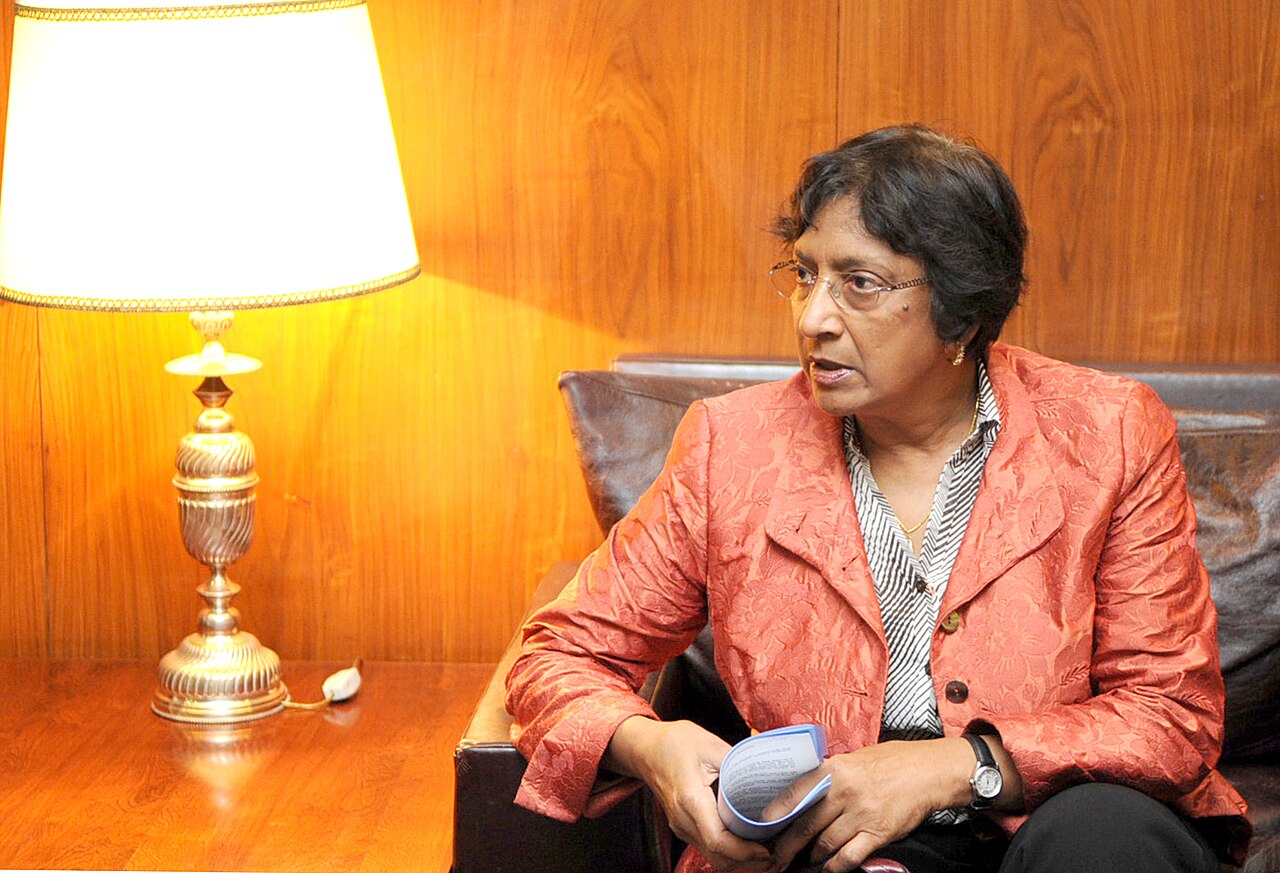
The Norwegian Nobel Committee awarded the 2026 Nobel Peace Prize on 9 October 2026 to Navi Pillay, a judge from South Africa and former United Nations High Commissioner for Human Rights, “for her efforts to promote peace and international law”.
Pillay, who was born in Durban on 23 September 1941 and is 85, is the sole laureate.
The committee described the laureate as a person who “with exceptional courage and integrity has led the way towards a more comprehensive global legal order”, and as “instrumental in ensuring that war crimes, crimes against humanity and genocide are prosecuted”.
Pillay grew up in a family of Indian Tamil origin under apartheid. A common thread, the committee said, runs from early work defending Nelson Mandela and others who stood up against apartheid to service as a judge in some of the key international court cases of our time. According to the biographical facts published by the Nobel Prize organisation, Pillay founded a law firm in Durban in 1967 and earned a Harvard doctorate in law in 1988.
Pillay was appointed to the High Court of South Africa in 1995, the facts page says, and later served as a judge on the International Criminal Tribunal for Rwanda and the International Criminal Court. Pillay was UN High Commissioner for Human Rights from 2008 to 2014 and chaired the UN Independent International Commission of Inquiry on the Occupied Palestinian Territory from 2021 to 2025. Since 2019, Pillay has also been an ad hoc judge on the International Court of Justice in the case in which Myanmar stands accused of genocide.
At the Rwanda tribunal, when it established that rape and sexual violence could constitute a crime against humanity, as well as genocide, Pillay’s influence was “a significant factor”, the committee said. In the same case, Pillay was instrumental in a separate legal breakthrough: for the first time, a defendant faced charges of incitement to commit genocide purely on the basis of spreading propaganda.
The committee said the prize springs directly from Alfred Nobel’s will: Pillay strengthens fraternity between nations and, by “systematically advancing the use of tribunals for peace and justice”, provides substance, direction and motivation for peace conferences in their modern form.
The system of international law is under “tremendous pressure”, the committee said, and it sees a shift towards power politics at the expense of legal frameworks. It acknowledged that the rules-based international order has never been perfect and that the greatest powers have often evaded responsibility, but argued that the sanctioning of judges and attacks on their institutions call for people of courage, vision and determination.
The committee called Pillay “one of the great defenders of international legal principles in our time”.