Half of electronics brought to UK Repair Cafés get fixed
The findings suggest community repair services and local maker spaces should become a formal part of the UK’s electronic waste system, the University of Surrey said.
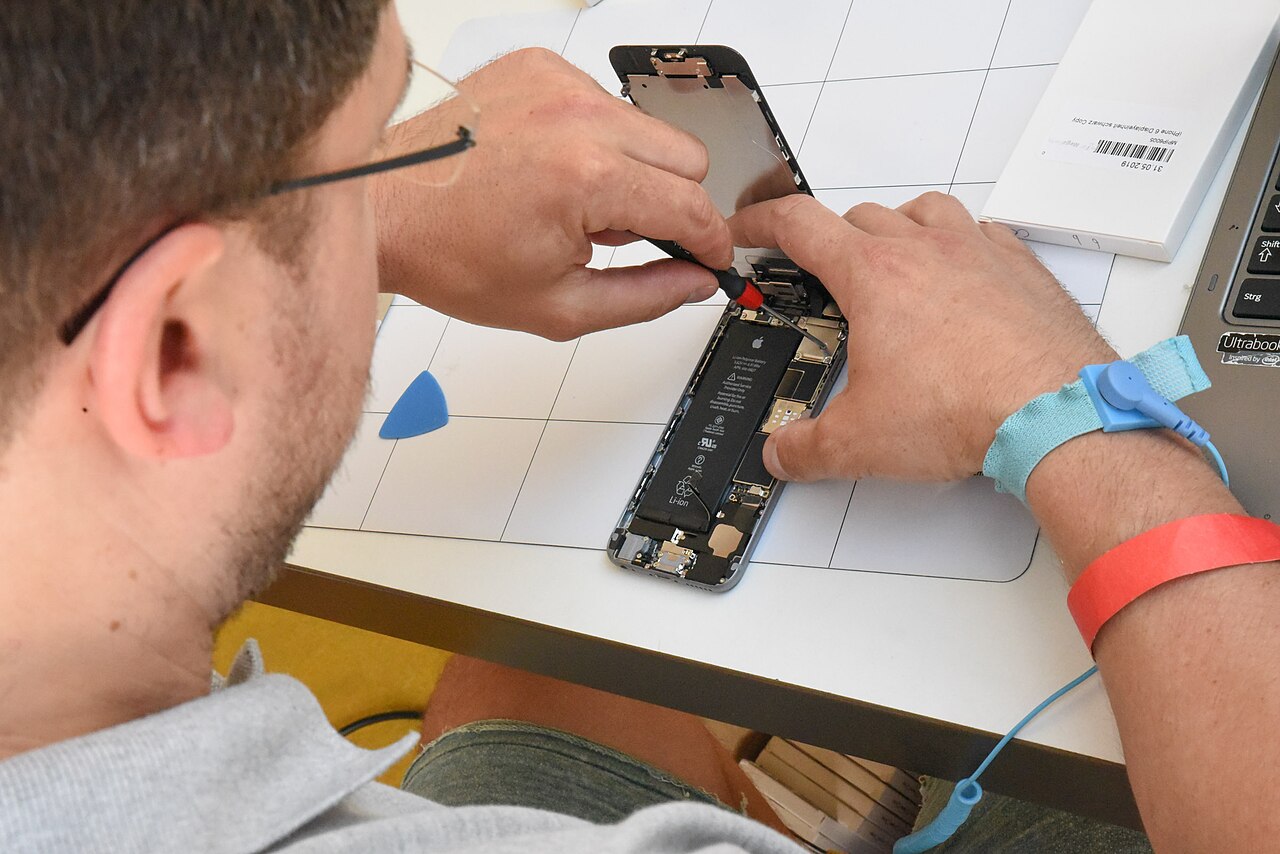
Half of electronics taken to UK Repair Cafés were repaired, but only around 2% to 2.5% of devices observed at a municipal recycling centre were considered suitable for reuse, the University of Surrey has said.
A further 28% of the items taken to Repair Cafés were potentially repairable. Taken together, the two groups account for 78% of the items brought in.
The research, published in Business Strategy and the Environment, drew on 10,678 UK Repair Café records, plus site visits to Slyfield Recycling Centre and to a Repair Café in Guildford.
Those observations were combined with government emissions data and mathematical models to test how electronic waste could be transported, assessed and processed more efficiently. The models also took in costs, waiting times, staffing capacity and the recovery of materials such as copper from old mobile phones.
The release, published on 30 September, did not say how many devices were observed at the recycling centre.
Most products in the analysis became obsolete within four to eight years, while mobile phones lasted around four and a half years.
Sheeba Pathak, a doctoral researcher at the University of Surrey and lead author of the study, said: “Too many electrical products are treated as waste before anyone has properly considered whether they can be repaired, reused or stripped for valuable parts. Recycling has an important role, but it should not automatically be the first destination for a device that may still have years of useful life.”
The researchers developed an integrated framework in which recycling centres act as coordination hubs, directing products to repair services, maker spaces and specialist processors. A decision system in the framework weighs cost, carbon emissions and processing time to identify the most appropriate route for each product.
The findings support producer-financed collection schemes and stronger take-back responsibilities for manufacturers and online marketplaces. The researchers also call for community repair organisations to receive formal recognition, funding and skills support rather than remaining disconnected volunteer initiatives.
Pathak added: “Repair Cafés already show what can be achieved, but relying on goodwill alone will not solve Britain’s electronic waste problem. Connecting these services with councils, manufacturers and recycling operators would help keep products in use, recover valuable resources locally and make the whole system more accountable.”