Defence Committee: Royal Navy short of anti-submarine frigates for Arctic
The Defence Committee’s report on the High North also says the UK has let its under-ice submarine capability lapse.
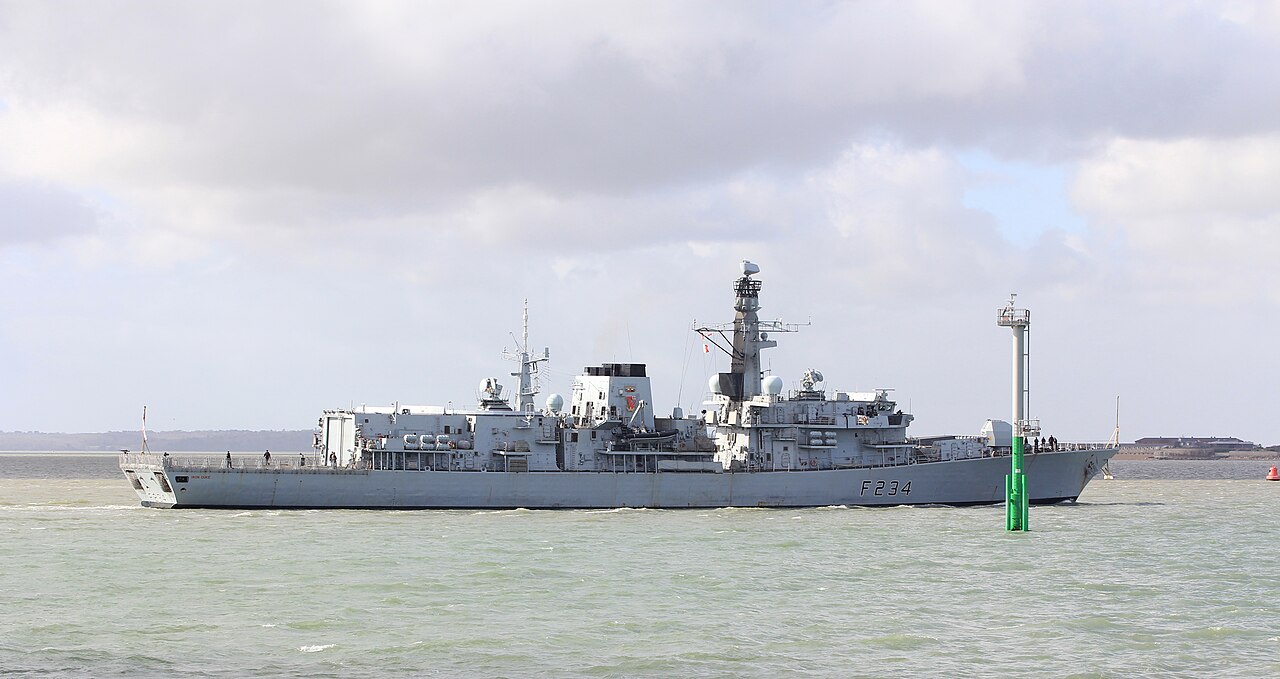
The Royal Navy is short of the anti-submarine frigates it needs in the Arctic and North Atlantic, with five fitted with towed-array sonar against a requirement for eight, the Commons Defence Committee has said.
The report, Defence in the High North, was published on 22 October by the committee, which is chaired by Labour’s Tanmanjeet Singh Dhesi. It follows the Ministry of Defence in taking the High North to mean the Greater Arctic and parts of the North Atlantic.
Frigates with towed-array sonar are central to detecting and tracking hostile submarines, including around the UK’s nuclear deterrent bases, the report said. If HMS Richmond and HMS Iron Duke, both decommissioned in mid-2026, had stayed in service, the navy would now have seven of them.
HMS Iron Duke had been through a five-year, £103 million refit less than three years earlier, and the Ministry of Defence had planned to fit it with the towed array.
The navy has 11 frigates and destroyers in service, five of them Type 23 frigates. The requirement, in place since the 2010 Strategic Defence and Security Review, is 19. That puts the fleet at 58% of it.
Eight Type 26 frigates are due to take over the anti-submarine role. Analysis cited in the report suggests the number of towed-array frigates could stay at five for the next three years.
That analysis assumes two Type 26 frigates being built for the Royal Navy are sold to Norway, which has ordered at least five. On that basis the navy would not reach eight towed-array frigates until 2037.
In that scenario, the committee said, the government “seems to have taken a conscious decision to prioritise defence exports over sovereign capability”.
The report also says the UK has “allowed its under-ice submarine capability to lapse”. The committee asked the government to brief it on progress in re-establishing that capability for at least some of the Astute Class submarines.
On the Hybrid Navy programme, which links crewed and uncrewed vessels, the committee said it was “not yet persuaded” that the £1.3 billion allocated would be sufficient to develop, procure and integrate its five planned classes of maritime platform.
The report cites a warning in June 2026 from Sir Keir Starmer, then prime minister, that “there could be an attack by Russia on NATO as soon as 2030”. It says Royal Navy equipment readiness and platform numbers in particular are “currently far worse than the government’s stated requirements”.
When it responds, the committee said, the government should set out how it will improve the availability of the navy’s frigates, destroyers and attack submarines before 2030.