Sun’s death could tear outer planets from orbit
A new study finds that once the Sun’s mass loss is modelled as uneven bursts rather than a smooth process, the outer planets’ dynamical lifetime collapses from an estimated quintillion years to about a billion, with some simulations showing disruption beginning before the Sun even becomes a white dwarf.
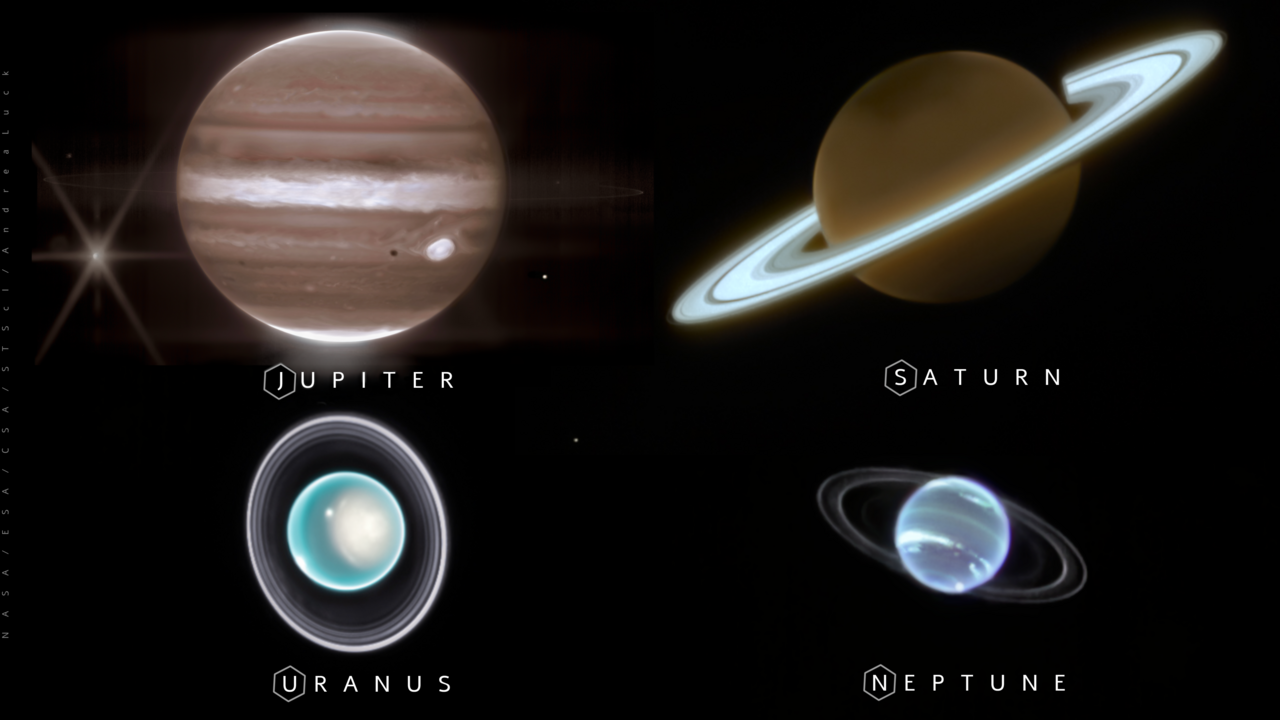
The outer planets of the Solar System could be torn loose from their orbits within a few billion years of the Sun’s death, far sooner than previously calculated, a new study has found.
Konstantin Batygin and Jim Fuller, of the California Institute of Technology, and Fred C. Adams, of the University of Michigan, modelled the Sun’s loss of mass as a series of uneven, randomly directed bursts rather than a smooth process, and found that the change dramatically shortens the outer planets’ remaining lifespan.
Astronomers had previously put the outer Solar System’s intrinsic dynamical lifetime at about a quintillion years, and had calculated that, even after accounting for the Sun’s mass loss and chance encounters with passing stars, the giant planets’ orbits would stay intact for roughly 100 billion years.
That calculation assumed the Sun would shed its outer layers smoothly and evenly in every direction. The new study finds that is not the case: measurements of the recoil, or “kick”, that white dwarfs receive show the Sun’s mass loss will instead come in discrete, unevenly directed bursts, each one nudging the star and jolting the surviving planets’ orbits.
Under that scenario, the dynamical lifetime of the outer Solar System collapses to about a billion years after the Sun becomes a white dwarf, the study found.
In 40% of the simulations, the planets were disrupted or violently scattered even earlier — while the Sun was still swelling into a red giant, before the white dwarf had even formed.
About 90% of simulations ended in destruction within three billion years of the white dwarf forming.
In one simulated case, the study’s authors wrote, Saturn was ejected within a few million years, Uranus and Neptune swapped places in their orbits, and another planet’s closest approach to the Sun was driven inside the orbit of Jupiter.
The Sun is expected to shed about 46% of its mass as it swells into a red giant, before shrinking to a white dwarf with just over half its current mass, the study said.
The inner Solar System remains far more secure by comparison: Mercury’s orbit carries only about a 1% chance of becoming unstable before the Sun even leaves the hydrogen-burning phase of its life known as the main sequence, the researchers noted.
“Our results return the Solar System’s dissolution to astrophysically familiar territory, and relocate its cause: not the slow seep of chaos, nor the chance encounter with a passing star, but the Sun itself, which in dying does not merely enlarge the planetary system it built—it shakes it, and more often than not, spills it,” the authors wrote in the study, which has been accepted for publication in The Astrophysical Journal Letters.