SpaceX Dragon sets fastest US docking record at ISS
Nasa astronaut Jessica Watkins commanded the four-person Dragon flight, which will carry out stem-cell and crop research before handing over to the outgoing Crew-12 team.
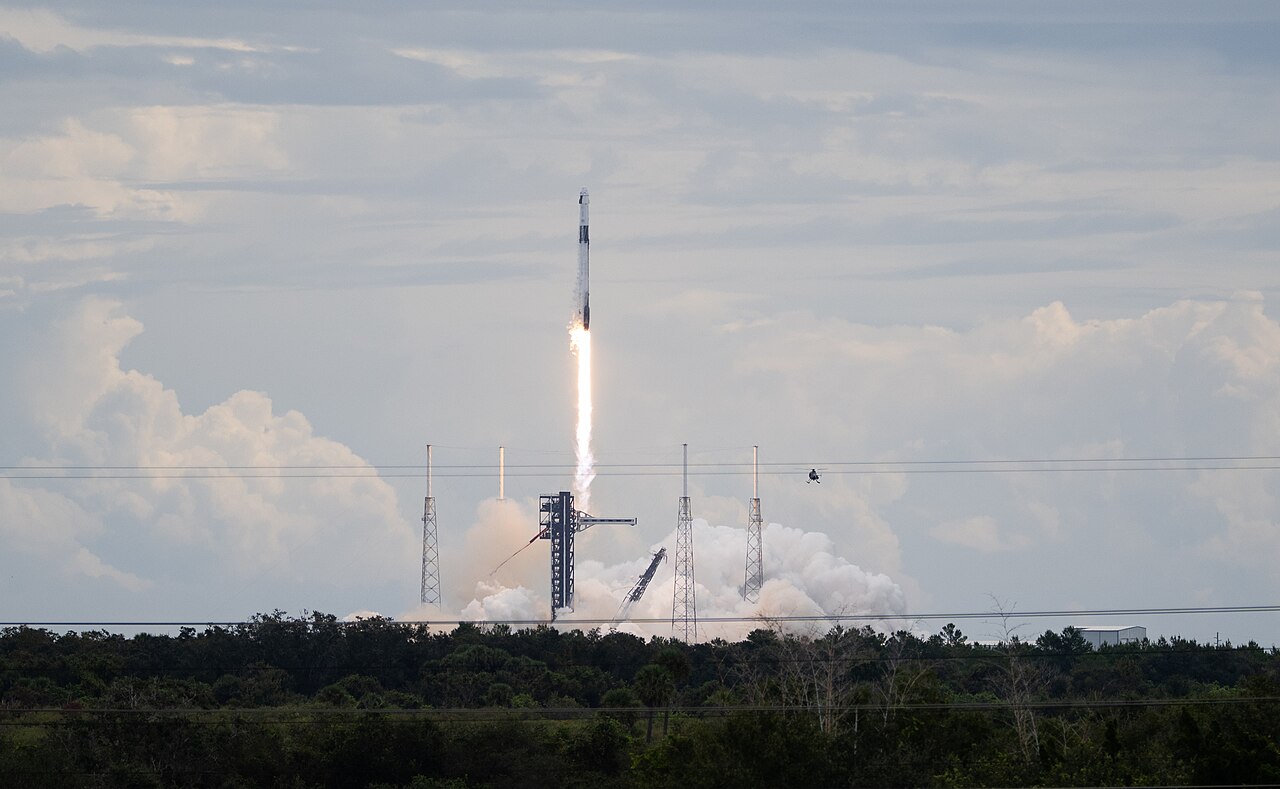
A SpaceX Dragon capsule has docked at the International Space Station (ISS) after a seven-hour, 50-minute flight that Nasa has called the fastest arrival by a US spacecraft in the station’s history.
The Falcon 9 rocket lifted off from Cape Canaveral Space Force Station on 1 October, carrying Nasa astronauts Jessica Watkins and Luke Delaney, Canadian Space Agency (CSA) astronaut Joshua Kutryk and Roscosmos cosmonaut Sergey Teteryatnikov.
Watkins, a geologist whose research has focused on landslides on Mars and Earth, commands the flight. The mission is Watkins’s second trip to the station, after a 170-day stay in 2022 as a mission specialist on the Crew-4 mission.
“Crew-13 is another demonstration of America’s unmatched capability in human spaceflight and the strength of our commercial partnerships,” Nasa Administrator Jared Isaacman said. “Congratulations to the crew and the Nasa and SpaceX teams who made today’s launch possible.”
Dragon docked automatically at the station’s Harmony module, Nasa said. The crew will change out of their spacesuits and prepare cargo for offload before opening the hatch into the station.
During their stay, the crew will use microgravity to grow human stem cell-derived tissue for research into conditions such as heart disease and Parkinson’s disease.
They will also test a new, mostly autonomous system for growing crops in space, and examine how plants grow outside dedicated growing facilities.
Separately, the crew will continue studies into blood-flow abnormalities linked to long periods in microgravity, using a new device designed to monitor astronauts’ health during the flight.
“Our steady cadence of commercial crew launches demonstrates the essential role the International Space Station plays in sustaining our presence in Earth’s orbit and sharpening the tools we’ll take forward to the Moon and Mars,” said Dr Lori Glaze, associate administrator of Nasa’s Human Spaceflight Mission Directorate.
The new arrivals will join the station’s Expedition 75 crew, which already includes Nasa astronaut Anil Menon and Roscosmos cosmonauts Pyotr Dubrov and Anna Kikina. After a handover period, Nasa’s Crew-12 team — astronauts Jessica Meir and Jack Hathaway, European Space Agency astronaut Sophie Adenot and Roscosmos cosmonaut Andrey Fedyaev — will return to Earth.
Crew-13 is part of Nasa’s Low Earth Orbit Program, under which the agency works with private companies such as SpaceX to keep the station crewed while it prepares for future missions to the Moon and Mars.