Why wind makes it feel colder than the air temperature
The Met Office says there is no official definition of wind chill, and the US National Weather Service left humidity out of its formula.
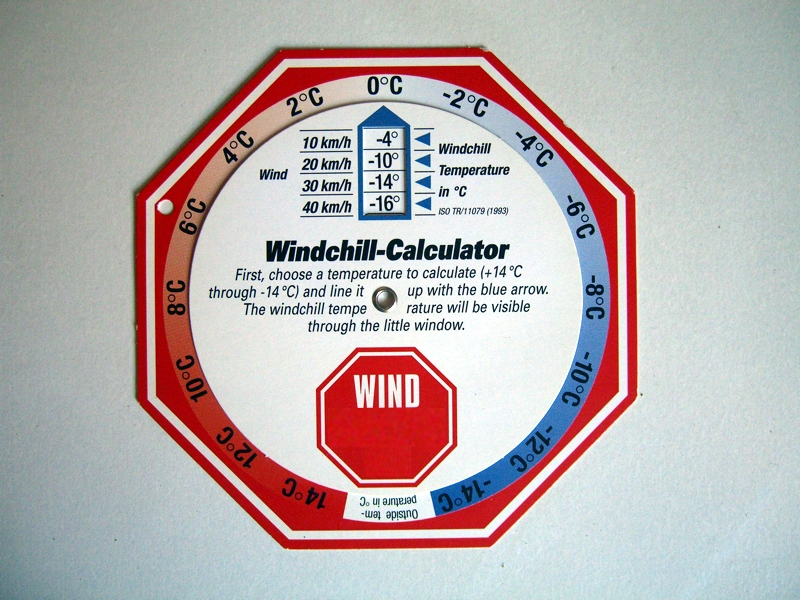
Moving air removes heat from the body more quickly than still air, making it harder to stay warm, the Met Office says. This is known as wind chill.
On a calm day, a temperature of 10°C may feel close to that value, the Met Office says, but with a strong wind it can feel several degrees colder. The effect is often most noticeable in exposed places such as coastal areas, hills and open countryside.
A learning page from the Met Office explains the mechanism. The stronger the wind, the faster moisture evaporates from the skin, and the faster the skin cools. On a calm day the body insulates itself with a boundary layer that warms the air closest to the skin. Wind takes that layer away, and skin temperature drops.
No single official definition
There is no official definition of wind chill, the Met Office says, and definitions vary globally depending on how it is measured. In the UK a system called the Joint Action Group for Temp Indices is used. It calculates wind chill by measuring how much heat is lost from a person’s bare face at a walking speed of 3mph.
The US National Weather Service, part of the National Oceanic and Atmospheric Administration, describes wind chill temperature as how cold people and animals feel outside. It is based on the rate of heat loss from exposed skin caused by wind and cold. Its example is air at 0°F with a 15 mph wind. The wind chill there is -19°F, and exposed skin can freeze in 30 minutes. The index is defined only for temperatures at or below 50°F and wind speeds above 3 mph.
The two bodies treat humidity differently. The Met Office says its “feels like” measure takes in relative humidity as well as air temperature and wind strength. The National Weather Service says tests on 12 subjects found humidity insignificant, changing the outcome by less than 1 degree, so it was left out to simplify the calculation.
What wind chill does not do
The National Weather Service says wind chill applies only to people and animals. A car radiator or a water pipe cools more quickly to the current air temperature but not below it. Its example is a radiator on a day when the air is at -5°F: even with a wind chill of -31°F, it says, the radiator will not drop lower than that air temperature.
It also says frostbite needs the actual air temperature near the skin to be below freezing, although hypothermia is still possible from exposure to cold. The Met Office says windy days may need extra layers even if temperatures look reasonable.